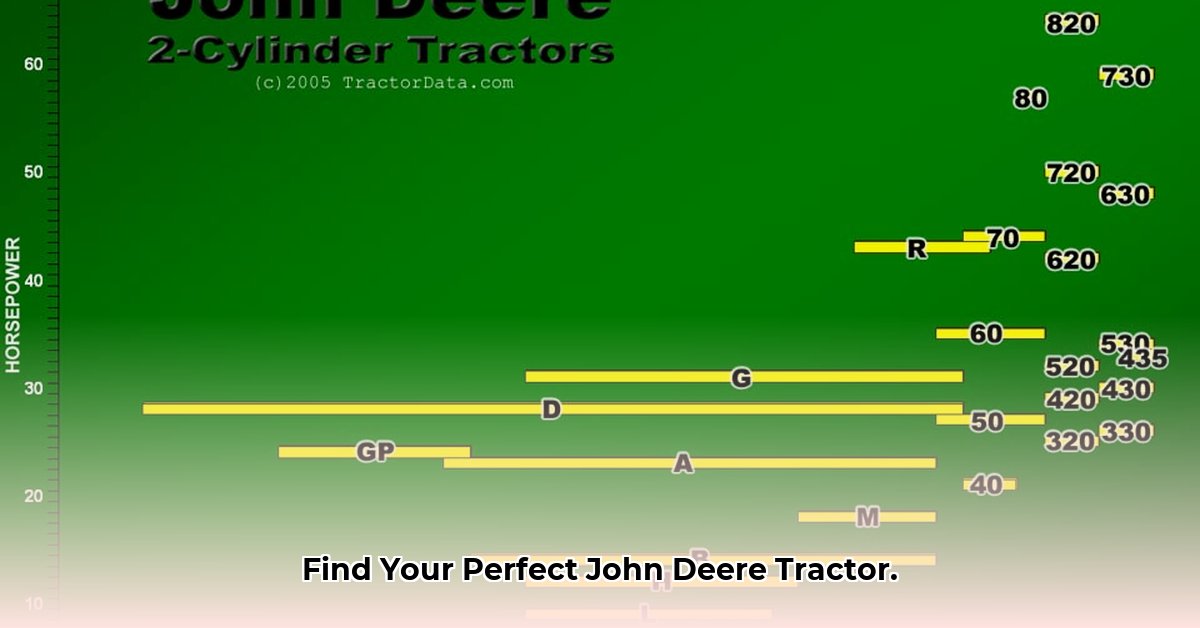
Choosing the right John Deere tractor is a pivotal decision for any farming operation. Selecting a tractor that's too small will limit productivity; one that's too large will lead to unnecessary expenses and resource waste. This comprehensive guide uses John Deere's tractor size charts to help you find the perfect fit for your farm's unique needs and contribute to sustainable agricultural practices. We'll decipher the chart's technical specifications, provide real-world examples, and highlight factors beyond horsepower to help you make an informed decision. For even more options, check out the latest John Deere deals and packages here.
Understanding John Deere Tractor Size Charts
John Deere's tractor size charts aren't just tables of numbers; they're detailed roadmaps to finding the ideal tractor. Each line within the chart represents a specific John Deere model, offering crucial specifications to guide your choice.
Decoding the Chart: Key Specifications
The chart typically includes the following critical specifications:
Horsepower (hp): This indicates the engine's power—its ability to pull equipment. Higher horsepower generally translates to handling larger fields or heavier machinery. Think of it as the engine's brute strength.
Engine Type: Most agricultural tractors use diesel engines known for their reliable and consistent power output. Understanding the engine type helps estimate fuel consumption.
PTO Horsepower (PTO hp): This specifies the power available at the power take-off (PTO) shaft, which powers implements like mowers, planters, and balers. PTO horsepower is typically lower than the engine's total horsepower.
Weight: A tractor's weight directly influences its traction and stability. Heavier tractors generally provide better grip for larger fields.
Implement Compatibility: The chart usually specifies which attachments and implements are best suited for each tractor model, ensuring optimal tool selection for various tasks.
Matching Tractors to Your Farming Needs
Let's examine how to apply this information practically:
Small-Scale Vegetable Farming: A smaller John Deere tractor, typically in the 20-40 horsepower range, is often ideal. These tractors are maneuverable, perfect for smaller fields, and minimize the risk of damaging delicate crops. Prioritize maneuverability in this context.
Large-Scale Grain Farming: Vast fields of wheat or corn demand high horsepower—150 hp or more—and potentially four-wheel drive (4WD) for superior traction and pulling power for large combines and planters.
Orchard Management: Orchard work requires a delicate touch. A smaller, highly maneuverable tractor with low ground clearance is crucial to prevent damage to trees.
Beyond Horsepower: Factors for Sustainable Farming
While horsepower is essential, several other crucial factors contribute to sustainable and efficient farming:
Fuel Efficiency: Opting for fuel-efficient tractors reduces operating costs and your farm's carbon footprint, benefiting both your budget and the environment. Isn't a lower environmental impact a worthwhile goal?
Maneuverability: Tractors that turn easily save time and fuel, particularly in smaller fields, minimizing soil compaction and maintaining soil health. How important is efficient use of land resources?
Technology: Modern tractors often feature GPS guidance and other smart technologies that optimize planting and spraying, leading to increased efficiency and resource conservation. Can precise farming techniques improve your bottom line?
Total Cost of Ownership (TCO): TCO includes fuel, maintenance, repair costs, and even resale value. Consider the entire cost of ownership over the tractor's lifespan. What is the long-term value proposition of various models?
Resources for Informed Decision-Making
For detailed information on John Deere tractor models and specifications, visit the official John Deere website. Your local John Deere dealer is an invaluable resource; they can offer personalized advice and potentially arrange test drives to help you find the perfect fit. Don't hesitate to utilize every available resource to ensure a successful purchase.
Choosing the right John Deere tractor is a substantial investment. By carefully considering all factors, beginning with the tractor size chart as an initial guide, you can select a machine that significantly enhances your farm's efficiency, minimizes environmental impacts, and supports sustainable farming practices. Remember, this is a long-term commitment; thorough research and a well-informed decision are crucial.